
How to Improve Your Golf Swing
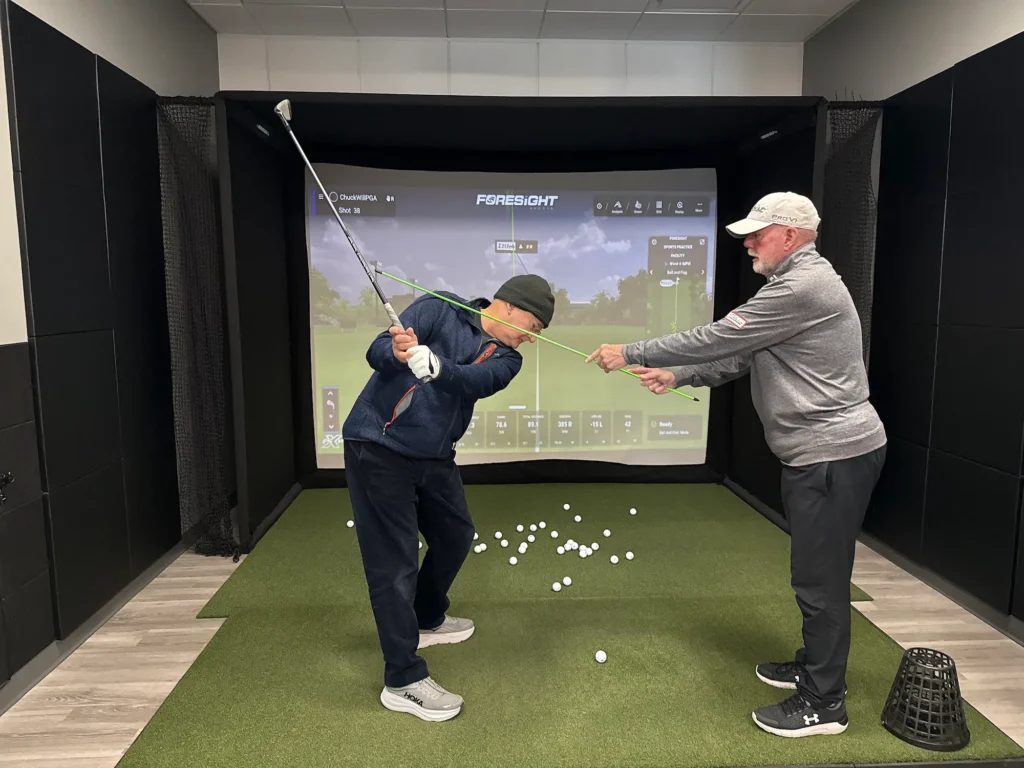
Golf is a game of precision, power and consistency, and even small improvements can dramatically lower your scores. Many golfers struggle to hit the ball farther or more accurately, but the key to a better game isn’t just spending more hours on the course—it’s about building the right strength, mobility, technique and mental focus.
At Method Health Club, we help golfers of all levels elevate their performance. From expert instruction to high-tech practice tools, here’s a comprehensive guide to taking your swing to the next level.
Breaking Down the Golf Swing

Understanding the different components of a swing helps identify areas to improve:
- Setup: Your posture, grip and alignment before the swing.
- Backswing: Rotating your body while maintaining balance to generate potential energy.
- Transition: The subtle shift from backswing to downswing, where power begins to transfer.
- Downswing: Accelerating the club while maintaining proper sequencing of the hips, torso and arms.
- Impact: The moment of contact with the ball, influenced by clubface angle, swing path and body position.
- Follow-Through: Completing the swing while maintaining balance, which ensures consistent ball flight and reduces injury risk.
Breaking your swing down into these stages can make practice more purposeful. Recording your swing or using a golf simulator allows you to analyze each phase and see where improvements can be made.
The Fundamentals: Grip, Stance and Alignment
Before worrying about distance, focus on consistency. Key fundamentals include:
- Grip: A neutral grip allows smooth movement without tension and helps control the clubface.
- Stance & Posture: Feet shoulder-width apart, knees slightly bent, spine neutral. Proper posture makes a fluid swing easier.
- Alignment: Square your body to the target to promote accuracy.
Even small adjustments in grip and stance can create big differences in ball flight.
Mobility and Flexibility for a Smoother Swing
Many golfers hit limits due to restricted mobility in the hips, spine or shoulders. Improving flexibility allows a fuller rotation, more control and a lower risk of injury.
Focus on:
- Hips: Greater rotation in the backswing and follow-through
- Thoracic spine: More efficient torso rotation
- Shoulders: Wider swing arc and better club control
Programs like Method Golf Performance use assessments to identify mobility restrictions and provide targeted exercises to enhance movement specific to golf.
Strength and Stability: Efficient Power
A powerful swing doesn’t come from swinging harder, it comes from generating force efficiently through your body. Strength and stability in the core, glutes and back support both distance and control.
Exercises to consider:
- Core: Planks, rotational medicine ball throws
- Legs & Glutes: Squats, lunges, hip bridges
- Back & Shoulders: Rows, cable rotations
Integrating golf-specific strength work can translate gym improvements directly to better swing mechanics on the course.
Practice Intentionally
Effective practice is purposeful and focused. Hitting balls at the range is most beneficial when you concentrate on one aspect at a time—tempo, swing plane or contact point.
- Track progress with video or simulators to see small adjustments in action
- Use half swings to focus on mechanics before attempting full swings
- Break down your swing into stages and work on the weakest phase
The Chuck Will Golf Academy at Method offers lessons that integrate technique analysis and practice strategies, helping golfers target the most impactful improvements efficiently.
Tempo, Timing and Rhythm
A consistent tempo is often overlooked. Rushing leads to mis-hits and inconsistency.
Tips for better tempo:
- Count “1-2” from backswing to downswing
- Focus on rhythm rather than speed
- Start with half-swings to build control before going full-speed
Consistent timing leads to better contact, accuracy and confidence.
Recovery and Longevity
Golf may not feel strenuous, but repetitive swings can strain the back, shoulders and wrists. Incorporating warm-ups, post-round stretching and core and mobility work helps prevent injuries and maintain consistent performance.
Improve Your Golf Swing at Method Health Club
At Method Health Club, we give golfers the tools, technology and coaching they need to improve faster. Whether your goal is to gain distance, improve accuracy or simply play more consistently, we have everything you need. Stop guessing and start improving your game the smart way. Schedule a session today and take your swing to the next level.